
Heading
AI News Reports And Journals
Amazon to replace 6 lakh human jobs with robots by 2033: NYT
The documents cited by the Times also showed that Amazon is attempting to soften the public perception of this shift.

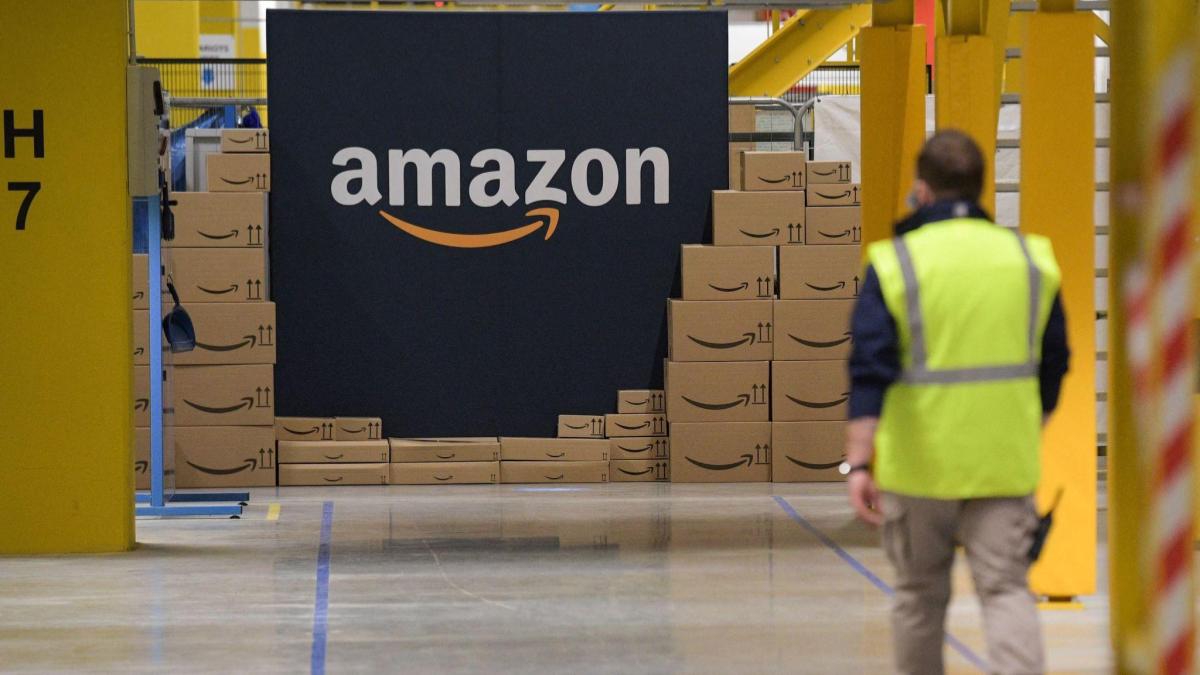
Amazon, the third-largest employer in the United States, is reportedly preparing to lean heavily on automation. The move could see more than half a million human jobs being replaced by robots over the next decade, the New York Times reported.
According to the Times’ report citing leaked internal documents, Amazon is planning to expand its robot workforce to streamline operations and cut down on human labour. The documents suggest that by 2033, up to 600,000 positions could be replaced through automation. While the report doesn’t confirm mass layoffs, it said Amazon could avoid hiring new workers as demand rises, effectively shrinking its human workforce over time.
The documents cited by the Times also showed that Amazon is attempting to soften the public perception of this shift. The company has reportedly discussed presenting itself as a “good corporate citizen” by engaging in local community initiatives. Additionally, executives were advised to avoid words such as “automation” or “AI”, instead using friendlier terms like “advanced technology” or “cobots” (collaborative robots), the Times reported.
CES 2026 was about execution, not just concepts. From Amazon's expanding AI ecosystem and autonomous vehicles to stair-climbing robots, exoskeletons, and next-generation health tech, these are the standout innovations that went beyond the headlines.
Watch the video as Tech360's AI & Tech Editor, Aayush Ailawadi, walks you through these products and technologies.
Amazon plans fourth robotics fulfillment center in Virginia
Once completed, the 3.1 million-square-foot facility will join a roster that includes a Virginia Beach site set to open later this year.



Dive Brief:
- Amazon has begun construction of a robotics fulfillment center in Goochland County, Virginia, according to a May 14 press release.
- The 3.1-million-square-foot facility will pick, pack and ship smaller items like books and toys, per the release. The site is expected to be fully operational in 2027, per an Amazon spokesperson.
- The Goochland County site will be the fourth such facility in the state for the e-commerce giant, which has invested more than $135 billion in Virginia since 2010.

Online retailer titan Amazon.com Inc. today unveiled a new warehouse robot during its Delivering the Future event in Dortmund, Germany, named Vulcan, the company said represents a “fundamental leap forward in robotics.”
Vulcan brings the first robot that has a sense of touch to Amazon’s array of warehouse robots to assist workers in the company’s fulfillment centers.
“In the past, when industrial robots have unexpected contact, they either emergency stop or smash through that contact,” said Aaron Parness, Amazon’s director of robotics. “They often don’t even know they have hit something because they cannot sense it.”
This problem is known as robots being “numb and dumb,” as most robots are connected to a visual intelligence system capable of seeing but not feeling.
For humans, the sensation of touch is a profound marker of how to interact with an object, especially if part of it is out of sight or is not entirely rigid, such as a box that suddenly crumples when compressed – a good indicator that you should stop gripping it so tightly and maybe grab it somewhere else.
Amazon said Vulcan was built on key advancements from Physical AI, a combination of artificial intelligence with real-world sensor data to allow autonomous machines to perceive, understand and interact with the physical world. Most machines only work with visual and location data to get their jobs done, but the addition of force feedback sensory information allows for manipulating objects in a more human way.
Vulcan isn’t the first robot Amazon produced that can grab and sort parcels and items. It also has other bird-named systems, Sparrow, Cardinal and Robin, which use vision AI and suction cups. Roving robots of Greek-named origins, Proteus, Titan and Hercules, move products around warehouses and fulfillment centers.
According to Amazon, the new robot can pick and stow around 75% of all items that flow through its warehouses at speeds comparable to front-line workers. Its underlying robot brain can also identify when it can’t move a specific item and ask a human worker to step in to assist.
“Vulcan works alongside our employees, and the combination is better than either on their own,” said Parness.
To that end, the robots will work with warehouse employees and not simply replace them, the company said. Its capabilities will be used to help them become safer in moving orders along more efficiently. It will be used to take over the more physically taxing parts of the fulfillment process.
“Working alongside Vulcan, we can pick and stow with greater ease,” said Kari Freitas Hardy, a front-line employee at GEG1, a fulfillment center in Washington, in a quote provided by Amazon. “It’s great to see how many of my co-workers have gained new job skills and taken on more technical roles.”
The company said Vulcan can learn from its own failures and understands how different objects behave when touched. It builds an understanding of the real world through training on examples of real-world physical objects that pass through its sensors, just like kids do. As a result, it will become smarter as time passes.
Amazon has deployed the new robots at its fulfillment centers in Spokane, Washington, in full operation. A test version is currently in operation in Hamburg, Germany. It can pick items from inventory. The company said it plans to add Vulcan to more warehouses in the United States and Germany by 2026.
Lucky Legal Service
Hartford CT
Willian Oliver
Web Designer /Publishing Lucky Legal Service
Marketing/Communication Specialist
Support Producer
legalprovider2@gmail.com
Phone:959-529-0745


Where to Find Us:
What's New
Super Lawyer List
Extended business hours
To accomodate our customers' busy schedules, we have extended our hours and are now open later
8a.m-5p.m.
Provider Law Frim
Connecticut Attorneys
Willinger,Willinger,Bucci
LEGAL NEWS
NEWS UPDATES


 Print
Print 